

Shortknee mas - Traditional mas in Grenada
Updated: Apr 5
ShortKnee
Shortknee is one of the traditional mas that can be found in Grenada, Carriacou and Petite Martinique. The original word was "Pierrot" which comes from the french creole language, meaning "clown".
Source: Robert Huggins

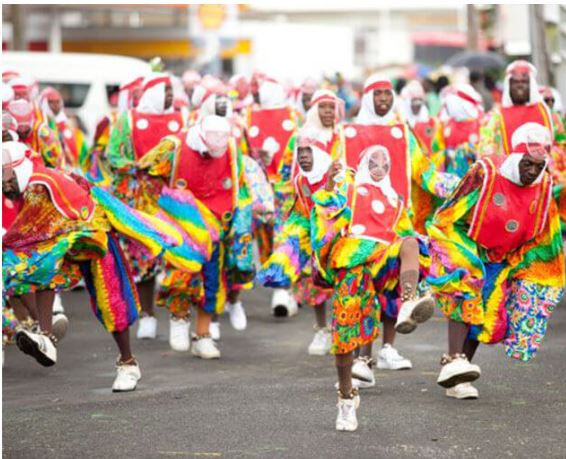
Photo Credits: Grenada Board of Tourism
Where
Shortknee bands are most prevalent on the western corridor of the island of Grenada. The parishes of Saint John, Saint Mark and Saint Patrick are homes to Shortknee bands such as Waterloo Shortknee and Coast Guard rebels. The Hermitage Shortknee band is one of the oldest shortknee bands on the island.
During the Carnival season which spans from July to August each year, the Shortknee mas can be seen. Shortknee masqueraders usually come out on Carnival Monday and also Carnival Tuesday.
Appearance of the Shortknee
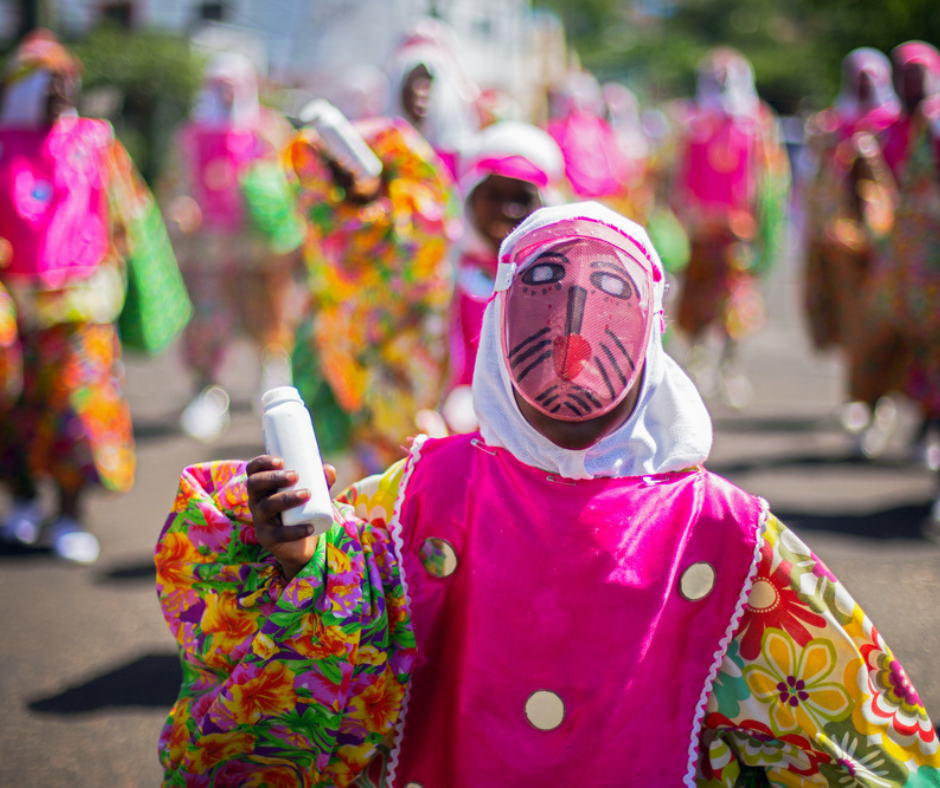
The Shortknee is uniquely dressed in multi-colored attire. They are covered from head to toe in multi-colored cloth. Both men and women, boys and girls play Short knee mas in the same clothes – a ¾ colourful jumpsuit, white shoes and faces covered in a wire mask. Anklets with bells that make ringing sounds are worn around the ankles. The stamping of the feet is done by masqueraders on stage and this intensifies the sound of the bells on the anklets. Small shiny mirrors can be found on the top of the coloured jumpsuit and is believed to ward away enemies. Also, the Shortknee carries white powder in their hands, and throw powder as they parade.
Copyright: Joshua Yetman

Copyright: Spicemas Corporation
Performance
The Shortknee performance is done without music. Shortknee masqueraders come on stage and chant one line or two lines of verse that tells a story about their life or village. As part of the performance, Shortknee masqueraders can be seen “powdering the stage with white powder”. This is part of their unique signature or featured part of their performance. The group of masqueraders which includes adults and children move in a circular fashion during heightened periods of the performance. There are one or two leaders, typically male, who call the chants while the other masqueraders respond.

Source: Joshua Yetman
Practices
Shortknee masqueraders are known for asking patrons for monies or donations as they parade along the street. Shortknee masqueraders do not speak but only make action to indicate they request. Usually, they stay in groups of two or three as they move around requesting donations.
Small children often fear the Shortknee as they do not speak and can appear as somewhat scary characters in their clown-like jumpsuit outfits. A common saying is “Look dem Shortknee and them”
View an example of the Shortknee display from St. Patrick's
Source: Nicodon
Connection to Africa
The Shortknee masquerader mirrors the Egungun of the Yoruba peoples of West Africa. The egungun serves as a tangible manifestation of spirits or ancestors. Its costume is crafted from a variety of high-quality materials such as cloth, beads, and shells, chosen specifically for their potent and empowering qualities. The egungun masquerade’s purpose is to invite those from the spiritual realm to descend, offering blessings, listening to grievances, and bestowing general prosperity. The appearance of the egungun signals the start of a multi-day celebration. Ultimately, the egungun aims to bridge the connection between the departed and the living.

Sources:
A to Z of Grenada heritage by John Angus Martin
The Egungun: The Costume and the Ritual in Death and The King’s Horseman by Catherine Suites
EGUNGUN: Yoruba Masquerade by Adeyinka Olaiya

Comments